
How Design Teams Manage Creative Workflows

By Sofia Rousenova
In today’s fast-moving digital world, creativity alone is no longer enough. High-performing design teams distinguish themselves not just by the quality of their ideas, but by how consistently and efficiently they bring those ideas to life. Behind every successful creative output lies a well-structured workflow – one that balances flexibility with control, and innovation with execution.
This article explores how design teams manage creative workflows to deliver exceptional results at scale.
Establishing Clear Workflow Stages
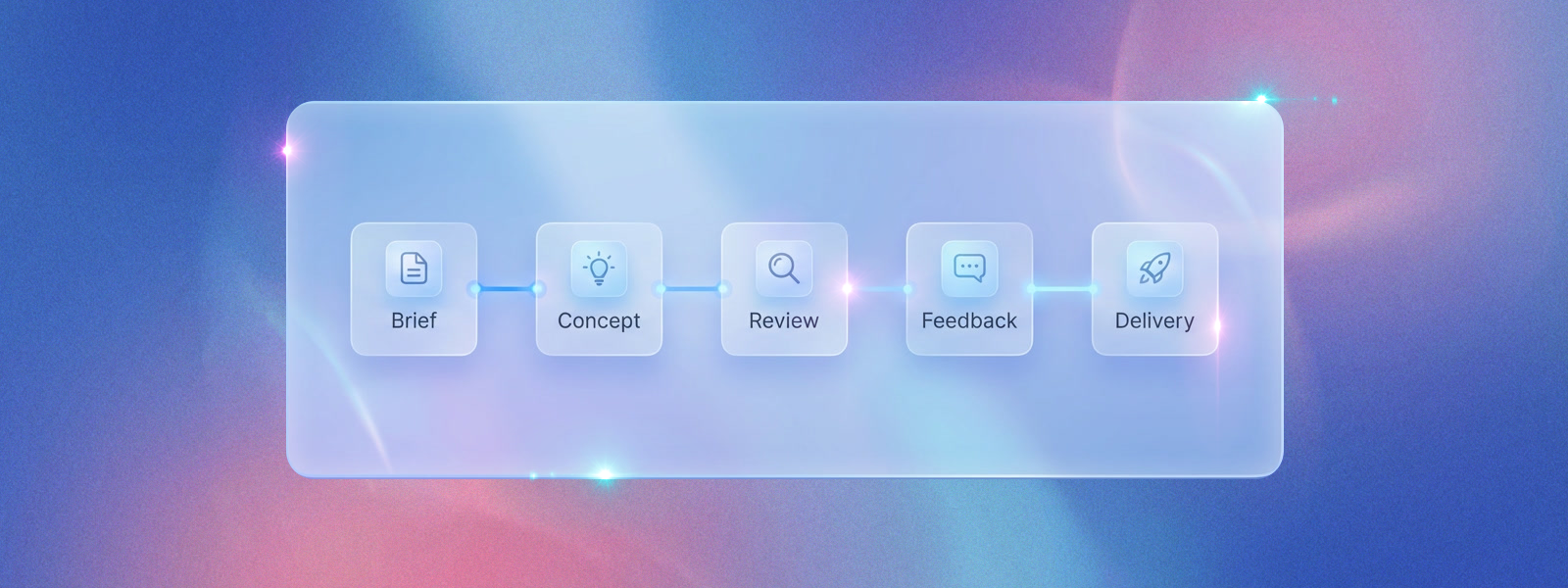
A creative workflow is a structured, repeatable sequence of steps guiding work from concept through to delivery. Key objectives include accelerating delivery without sacrificing quality, ensuring brand and style consistency, facilitating team collaboration, and reducing rework. Teams break down creative work into distinct, manageable stages. Leading organisations use models like Agile or the Double Diamond design framework. While the specifics may vary, most workflows include:
- Briefing and discovery
- Concept development
- Internal review and iteration
- Stakeholder feedback
- Final delivery and approval
“Clear briefs, visual timelines and centralised communication are the backbone of effective creative workflow management”. Such segmentation ensures clarity across the entire process. Every team member understands where a project stands, what is expected, and what comes next. As a result, teams avoid unnecessary delays and reduce the risk of misalignment.
Centralising Work & Communication and Using Visual Workflow Systems
Fragmentation is one of the biggest obstacles to efficient creative workflows. Disconnected tools, scattered feedback, and multiple file versions often lead to confusion and inefficiencies. High-performing teams address this by creating a single source of truth where all project-related elements live:
- Design files
- Feedback and comments
- Version history
- Project timelines
- Real-time visibility into project status
- Clear prioritisation of tasks
- Early identification of bottlenecks

Centralisation not only improves visibility but also accelerates decision-making and reduces costly errors. Creative professionals are inherently visual thinkers. As such, mature teams rely on visual systems to manage their workflows effectively. Visual workflows make complex processes easier to understand and manage, improving both individual productivity and team alignment. Some of the more popular tools for managing different aspects of workflows are:
- Figma for design
- Miro for whiteboarding
- Jira/Asana/Monday.com/Trello for task tracking
- Slack/Notion for communication
Defining Roles and Decision-Making Authority
Ambiguity in roles is a common cause of workflow breakdowns. A structured approach prevents excessive revisions, avoids conflicting input, and ensures that decisions are made efficiently. High-performing teams eliminate this by clearly defining:
- Who is responsible for execution
- Who provides feedback
- Who has final approval authority
Automating Repetitive Processes & Integrating AI
Administrative tasks and repetitive design work can consume a significant portion of a designer’s time. Leading teams actively reduce this burden through automation. Common areas for automation include:
- Task assignment and status updates
- File organisation and syncing
- Approval notifications
- Workflow triggers

Artificial intelligence is becoming an integral part of modern creative workflows. From generating initial concepts to accelerating production tasks, AI offers significant efficiency gains. The most effective workflows combine the speed of AI with the expertise of human designers.
Optimising the Workflow
Creative workflows are not static. As teams grow, tools evolve, and client expectations shift, processes must adapt. Design teams treat workflow management as an ongoing discipline. They regularly:
- Conduct post-project retrospectives
- Identify bottlenecks and inefficiencies
- Refine processes based on real-world insights
This commitment to improvement enables long-term scalability and sustained performance.
Conclusion
Top teams build systems that allow creativity to flourish consistently. By structuring their workflows, centralising collaboration, defining roles, and embracing continuous improvement, they create an environment where great ideas can be developed, refined, and delivered efficiently.